HOW TO SUPPORT NEWBORN MILESTONES
What week does baby first smile?
When should baby sit up?
Baby not rolling over yet
If so, welcome to parenthood! Wondering and worrying about baby milestones – if you’re doing enough to help your little one meet them or if your baby is developmentally on track – is a very common experience for parents.
My mission as a pediatric Occupational Therapist is to kick the unnecessary worry and self-doubt to the curb and help you confidently and playfully give your kid the best start possible. So today I want to share with you just how simple, easy, cheap – AND FUN – supporting your baby’s early developmental milestones can be!
HOW DO BABIES LEARN TO MEET MILESTONES?
Babies learn best through movement and interacting with their environment (their favorite part of their environment? YOU!!!). That’s it!
But for today’s purposes let’s focus on movement and interaction with the world around them.
Babies Learn Through Movement
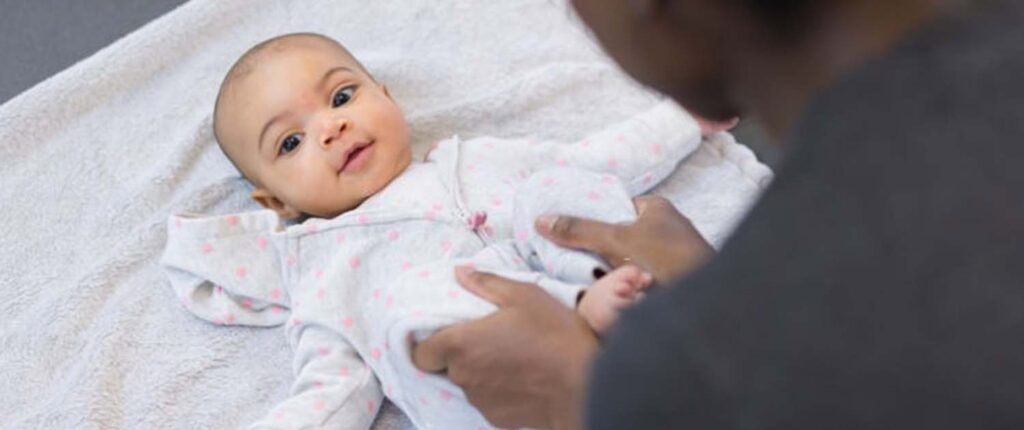
Movement initially looks like straightening and bending the arms and legs and turning the head. It looks like random newborn wiggles but it’s really important for baby’s development and learning. Through movement your baby begins to map out their own body, strengthen their muscles and stretch out of the curled up womb position they’ve been in for months (nerdy term: physiological flexion).
Movement starts to get more purposeful as baby gets older and we start to see those big milestones – grasping toys, rolling, sitting, crawling, standing and walking. But what many parents don’t realize is that between these well-recognized milestones are dozens of “mini-milestones” – subtle skills that baby practices and masters in order to reach the next big milestone.
Babies Learn Through Interaction With The Environment
Your baby’s window the the world is his or her senses. Through engaged, interactive play, your kid is not only learning about the people and objects and world around him, baby is also learning about how to skillfully use those amazing senses. They’re new tools and there’s a learning curve!
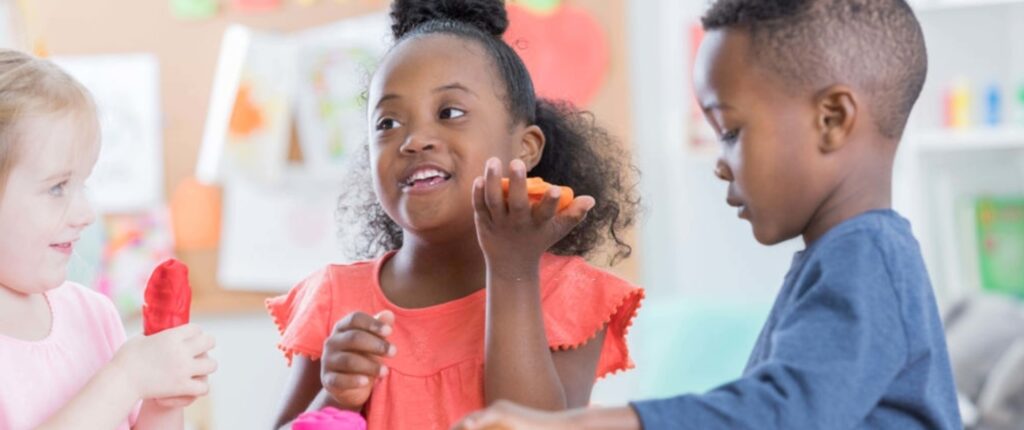
Through active play, babies turn toward sounds and follow movements with the eyes. They feel – the blanket, their hand, their own faces. They touch and put things in their mouths. They imitate the silly faces you make and hear the cadence of your voice. They squeeze and bang and drop and push and pull. Babies learn through DOING and all the sensing that goes along with it.
Newborn Milestones Through Play www.growtooltherapies.org
HOW CAN I PLAY WITH MY NEWBORN TO SUPPORT MILESTONES?
Allow Your Baby Unrestricted Movement – LOTS Of It!
One of the BEST things you can do to support baby milestones is allowing your baby as much freedom of movement as possible during awake times. Unfortunately all those cute and convenient baby holders – car seat carriers outside the car, infant swings, bouncy seats, squishy lounge pillows, exersaucers and jumpers – limit your baby’s movement.
Some time in these devices won’t derail development but many (many, many) parents don’t fully realize how much cumulative time baby is spending in gear and how little of their awake time allows full freedom of movement.
If you’re realizing right about now that your little one doesn’t get much unrestricted movement time, DO. NOT. BEAT. YOURSELF. UP. I promise guilt won’t help your baby’s development. What will is making some changes starting today:
- Put blankets or playmats in frequently used areas of your home
- Put some of your baby gear in a closet so that it’s actually EASIER and more convenient to use those blankets or playmats
- If the floor isn’t safe in your home (siblings, pets, etc.), use a portable play yard (the Pack ‘n Play has always been my go-to)
Place Baby In Different Positions During Awake Times
Babies have important developmental skills to work on in many body positions but for a good chunk the first year of life they’re dependent on us for their positioning and for position changes.
Modern babyhood consists of a LOT of time in one position – on the back. If parents are doing Tummy Time at all, it often amounts to a few minutes a day. But there are more than 2 positions to consider.
To learn about all the other positions in www.growtooltherapies.org
Support Active, Engaged Awake Time
Babies learn best by DOING. I know, I know brand new babies don’t seem like they can DO very much. But they can!
- They can turn their heads to look at something they see or hear
- They can visually explore something new
- They can begin to imitate facial expressions (thanks to mirror motor neurons in the brain!)
- They can engage in reciprocal (back and forth) noise-making
- They can feel new textures on their skin as you bring things to their hands, feet, face, body
As much as possible, we want active, moving babies interacting in their three dimensional world instead of passive consumers of two-dimensional representations. This is one of the reasons why I (along with maaaaany child development professionals) recommend against screen time for kids less than a year old. Any doubt about delayed developmental milestones to your child contact, Grow Tool Therapies, pediatric Occupational Therapist .